
Introduction: The Hidden Costs of Traditional Multi-Color Printing
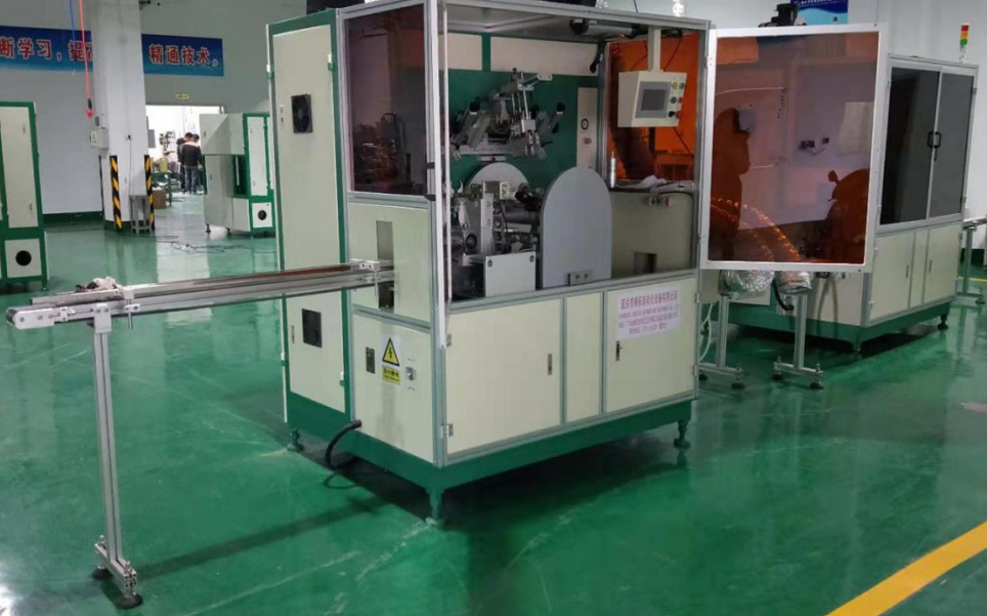
Why buy two machines when one can do the job? Traditional multi-color bottle printing forces manufacturers into a costly cycle: print the first color, manually transfer the bottle, reload it onto a second machine for the second color, and hope the alignment is perfect. This "stop-and-go" method is rife with inefficiencies. Our flagship 6.2T printer introduces the Single-Pass 2-Color Process, designed to streamline your production line and maximize ROI.
The Core Innovation: The Unified Jig System
The secret to flawless dual-color printing lies in the Unified Jig System. Instead of transferring bottles between stations or machines, the container remains secured in the exact same fixture from the moment it is loaded until the final UV cure.
The Problem with Re-Clamping
In conventional workflows, removing a bottle after the first color and placing it into another fixture for the second color introduces "re-clamping errors." Even a microscopic shift of 0.03mm—invisible to the naked eye during handling—becomes a glaring misalignment in the final print. This leads to:
- High rejection rates (up to 15% in some shops).
- Wasted expensive UV inks and substrates.
- Excessive manual quality control checks.
Our Solution: Zero Tolerance for Error
By keeping the bottle in one jig, we eliminate the variable of human handling. The full servo multi-axis linkage controls the rotation and positioning with micron-level precision. Whether printing on a round whiskey bottle or a tricky oval cosmetic flask, the second color lands exactly where it should, every time.
Efficiency Breakdown: From 3 Machines to 1
Let’s look at the numbers. To achieve two-color printing on standard equipment, you typically need:
- Machine A (1st Color)
- Machine B (2nd Color)
- An IR or UV curing tunnel between them.
- At least 2-3 operators to manage the workflow.
With our Integrated System:
- Footprint Reduction: The 4000x4000mm integrated unit replaces three separate pieces of equipment, freeing up valuable factory floor space.
- Labor Optimization: One operator can now manage the entire process. The automatic loading and unloading conveyors handle the rest.
- Cycle Time Optimization: Our full servo system optimizes the printing curve. While a traditional line might average 15-20 pieces per minute due to transfer delays, this machine achieves 25-40 pieces per minute for double-sided flat printing and 40-50 pcs/min for standard rounds.
Material Versatility: One Pass Fits All
The ability to complete two colors in one pass is particularly beneficial for high-end materials:
- Glass & Ceramics: No risk of chipping or marring the surface during multiple loading/unloading cycles.
- Soft Plastics: Consistent clamping pressure prevents deformation, ensuring the print on a squeezable lotion bottle remains sharp.
- Metal: Perfect for wine bottle caps and aluminum flasks requiring crisp, overlaid graphics.
Financial Impact: A Quick Calculation
| Metric | Traditional Method (2 Machines) | Unified Jig System (1 Machine) |
|---|---|---|
| Equipment Cost | High (2x Machine Cost) | Medium (1x Machine Cost) |
| Labor Required | 2-3 Operators | 1 Operator |
| Floor Space | Large (Conveyors + 2 Units) | Compact (Single Unit) |
| Error Rate | Moderate to High | Near Zero |
| Output/Hour | Lower (Transfer delays) | Higher (Optimized cycle) |
Conclusion: Streamline to Profit
The Unified Jig System isn't just a feature; it's a strategic advantage. By integrating multi-color printing into a single, robust 6200kg platform, you eliminate the bottlenecks that plague traditional decorating lines. If you are in the cosmetics, spirits, or daily chemical industry, this technology is the key to scaling production without scaling headaches.
Internal Linking Strategy
- [View Machine Specs: 6200kg Heavy-Duty Printer]
- [Learn About: UV Ink Advantages in Single-Pass Printing]
- [Compare Models: Heavy-Duty vs. Standard Screen Printers]